How Much Deposit Do You Need for a Pre-Construction Home in Ontario?
Updated September 11, 2026
One of the first questions buyers ask when considering a new home is:
“How much deposit do I need for pre-construction in Ontario?”
The answer is not as simple as saying 5%, 10% or 20%.
When buying directly from a builder, there are actually two different numbers you need to understand:
The builder’s deposit requirement, which determines how much money you must pay during the pre-construction period; and
Your mortgage down payment, which determines how much equity you ultimately need when the home closes.
These two amounts are related—but they are not the same thing.
In today’s Ontario market, some builders are offering extended or reduced deposit structures such as 5%, 8% or 10% to make new homes more accessible. Other projects may still require 15% or 20%.
Understanding how these deposits work can help you determine whether a pre-construction purchase actually fits your financial plan.
What Is a Pre-Construction Deposit?
A pre-construction deposit is money you pay to the builder after entering into an Agreement of Purchase and Sale.
The deposit forms part of the purchase price of your home.
For example:
Purchase price:
$800,000
Total builder deposit:
10% = $80,000
That $80,000 is not an additional charge on top of the $800,000.
It is credited toward the purchase price when the transaction ultimately closes.
The remaining balance is normally funded through your mortgage and any additional cash required at closing.
How Are Pre-Construction Deposits Paid?
Unlike many resale transactions, builders usually don’t require the entire deposit on the first day.
Instead, deposits are typically paid in stages.
A hypothetical deposit structure might look like this:
$10,000 on signing
Balance to 5% within 30 days
2.5% in 90 days
2.5% in 180 days
Total:
10%
Another builder might spread payments over one or two years.
For example:
$10,000 on signing
Balance to 2.5% in 30 days
2.5% in 120 days
2.5% in 240 days
2.5% in 365 days
Again, total:
10%
There is no universal Ontario pre-construction deposit schedule.
Each builder and project establishes its own requirements.
What Deposit Structures Are Builders Offering in 2026?
In the current market, you may encounter deposit structures such as:
5%
8%
10%
15%
20%
Some builders may also offer a small initial deposit followed by extended payments over 12, 18 or even 24 months.
These structures are particularly attractive to buyers who have sufficient income to qualify for the home but need additional time to accumulate their savings.
However:
A low builder deposit does not necessarily mean you can close the home with that same down payment.
This distinction is critical.
Builder Deposit vs Mortgage Down Payment
Consider a buyer purchasing a:
$1,000,000 new home
Suppose the builder requires only:
10% deposit = $100,000
By closing, however, the buyer’s mortgage lender may require a different total down payment depending on:
Purchase price
Mortgage insurance
Whether the property will be owner-occupied
Borrower’s income and credit
Appraised value
Lender policies
Mortgage-insurance requirements
The $100,000 already paid to the builder becomes part of that down payment.
If the lender requires additional equity, the buyer must bring the difference at closing.
What Is the Minimum Mortgage Down Payment in Canada in 2026?
For eligible insured mortgages, current federal rules generally require:
Purchase price of $500,000 or less
Minimum:
5%
Purchase price above $500,000 but below $1.5 million
Minimum:
5% on the first $500,000
plus
10% on the portion above $500,000
Government-guaranteed mortgage insurance is available on eligible properties valued below $1.5 million.
If the applicable purchase price reaches the insured-mortgage limit or mortgage insurance is otherwise unavailable, the borrower generally needs conventional financing, where lenders typically require at least 20% down, subject to lender underwriting.
Example: $700,000 New Home
Purchase price:
$700,000
Minimum insured-mortgage down payment:
First $500,000 × 5%:
$25,000
Remaining $200,000 × 10%:
$20,000
Total minimum:
$45,000
That equals approximately:
6.43%
of the purchase price.
Now suppose the builder requires a:
10% deposit
That would equal:
$70,000
In this example, the buyer has already paid more than the statutory minimum insured-mortgage down payment before closing.
But mortgage qualification is still required.
Example: $800,000 New Home
Purchase price:
$800,000
Minimum insured-mortgage down payment:
First $500,000:
$25,000
Remaining $300,000 × 10%:
$30,000
Total:
$55,000
Approximately:
6.88%
Suppose the builder requires:
10% = $80,000
Again, the builder deposit is higher than the minimum insured-mortgage down payment.
That does not mean the buyer automatically qualifies for the mortgage.
Income, credit, debt ratios and appraisal still matter.
Example: $1 Million New Home
Purchase price:
$1,000,000
Minimum insured-mortgage down payment:
First $500,000:
$25,000
Remaining $500,000 × 10%:
$50,000
Minimum:
$75,000
That’s:
7.5%
of the purchase price.
Suppose your builder requires a:
10% deposit = $100,000
The builder deposit exceeds the minimum insured-mortgage down payment.
However, buyers should also remember that mortgage default insurance premiums may apply when the down payment is less than 20%.
CMHC confirms that mortgage loan insurance allows eligible purchasers to finance as much as 95% of a home’s value, subject to program requirements.
Example: $1.4 Million New Home
The federal government’s mortgage reforms have particularly changed the numbers between $1 million and $1.5 million.
For a:
$1,400,000 home
Minimum insured-mortgage down payment:
First $500,000 × 5%:
$25,000
Remaining $900,000 × 10%:
$90,000
Total:
$115,000
Before the insured-mortgage limit was increased, a purchaser of a $1.4-million property generally needed at least 20%, or:
$280,000
The federal government specifically used this example when implementing the new rules.
That’s a substantial reduction in the minimum upfront equity required for eligible insured borrowers.
Why Do Builders Ask for 10%, 15% or 20% if the Mortgage Minimum Can Be Lower?
Because the builder’s deposit is not determined by Canada’s minimum mortgage rules.
Builders establish deposits for their own sales and project-financing requirements.
Pre-construction deposits help demonstrate committed sales and provide security under the purchase agreement.
That is why a builder might require:
10%
even though the buyer’s eventual insured-mortgage minimum is only 6%–8%.
Or a condominium project might request:
15% or 20%
even though the eventual borrower could theoretically qualify for insured financing with less.
Why Are Some Builders Offering Lower Deposits in 2026?
Today’s pre-construction market is significantly more competitive than it was during the peak.
A lower or extended deposit schedule can help builders reduce one of the biggest barriers buyers face:
Cash flow.
Instead of competing only on headline price, builders can improve affordability by allowing buyers more time to save.
For example:
Option A
10% required within 90 days.
versus
Option B
10% spread over 18 months.
The total deposit is identical.
But Option B may be much easier for a buyer to manage.
This is why buyers should compare deposit timing, not just total percentage.
Is a 5% Builder Deposit Better Than a 10% Deposit?
Not automatically.
A lower deposit can be excellent for cash-flow purposes.
But you need to look at the complete deal.
Imagine these two projects:
Project A
Price: $800,000
Deposit: 5%
Very few incentives.
Project B
Price: $790,000
Deposit: 10%
Includes capped development charges and substantial upgrades.
Project A requires less cash upfront.
But Project B might still provide better overall value.
The correct question is:
“Which project offers the best combination of price, deposit structure, incentives, location and closing costs?”
Does a Lower Deposit Mean a Smaller Down Payment?
No.
This is one of the biggest misconceptions.
Suppose you purchase a home for:
$900,000
Builder requires:
5% = $45,000
Your minimum insured mortgage down payment would generally be:
5% of first $500,000:
$25,000
plus 10% of remaining $400,000:
$40,000
Total:
$65,000
You have already paid the builder:
$45,000
So you would still need at least:
$20,000
toward the minimum down payment at closing, before considering closing costs and mortgage-insurance requirements.
That’s why a builder advertising:
“Only 5% deposit!”
doesn’t necessarily mean:
“Buy this home with only 5% total cash.”
Your Deposit Does Not Cover Closing Costs
This is equally important.
Your deposit applies toward the purchase price.
It does not normally cover expenses such as:
Ontario Land Transfer Tax
Toronto Municipal Land Transfer Tax
Legal fees
Title insurance
Builder adjustments
Development charges where applicable
Property-tax adjustments
Utility charges
Condominium occupancy expenses
Other closing costs
You need additional funds available.
As discussed in our Pre-Construction Closing Costs in Ontario Guide, buyers should budget separately for these amounts.
What Happens to Your Deposit While the Home Is Being Built?
Deposit protection depends partly on the type of new home you’re purchasing.
Ontario provides statutory protections for deposits on qualifying new homes.
For freehold homes, Tarion provides deposit protection subject to applicable limits.
Condominium deposits are generally protected through trust requirements under Ontario condominium legislation, with additional Tarion protection available in certain circumstances.
The exact protection varies by property and agreement.
Buyers should confirm:
Who holds the deposit
Whether it is held in trust
Applicable Tarion protection
Refund conditions
What happens if the project is cancelled
before committing substantial funds.
What Happens if the Project Is Cancelled?
Cancellation provisions depend on the Agreement of Purchase and Sale and applicable Ontario new-home rules.
In many cases, deposits are returned when a project is legitimately terminated according to the agreement.
However, buyers need to understand an important financial risk:
Getting your original deposit back is not necessarily the same as being financially whole.
Suppose you paid:
$80,000
into a project over three years.
If the project is cancelled and the deposit is returned, you may still have lost:
Years of opportunity
Purchasing power
Alternative investment returns
Access to comparable homes at the earlier price
That is one reason builder and project due diligence matters.
Do You Earn Interest on Your Deposit?
Whether interest is payable and how it is calculated depends on the type of property, applicable legislation and purchase agreement.
Buyers should not assume they will receive significant investment returns on funds held as builder deposits.
Think of these funds primarily as:
Capital committed toward your future purchase.
Can You Use an RRSP for Your Pre-Construction Down Payment?
Eligible buyers may be able to use the federal Home Buyers’ Plan (HBP).
The current HBP limit is:
$60,000 per eligible individual
allowing eligible buyers to withdraw qualifying funds from their RRSP toward purchasing or building a qualifying home.
For two eligible purchasers, this can potentially represent:
$120,000
in RRSP withdrawals.
The program has specific eligibility and repayment requirements.
What About the First Home Savings Account?
Eligible first-time buyers may also use a First Home Savings Account (FHSA).
Unlike an RRSP HBP withdrawal, qualifying FHSA withdrawals used to purchase a first home generally do not need to be repaid.
Depending on your circumstances, combining:
FHSA savings + HBP withdrawal + personal savings
can substantially increase the funds available toward a down payment.
Tax rules should be confirmed with an appropriate professional.
Can Family Help With the Down Payment?
Mortgage insurers and lenders may allow a non-repayable financial gift from an immediate or qualifying family member, subject to lender requirements.
CMHC recognizes traditional down-payment sources such as:
Personal savings
Proceeds from selling property
Non-repayable gifts from relatives
subject to underwriting requirements.
The lender may require a gift letter and evidence of where the funds came from.
Never borrow funds or represent borrowed funds as a gift without telling your lender.
Can You Use Borrowed Money for a Deposit?
Certain mortgage programs may permit non-traditional down-payment sources.
However, borrowed funds create additional debt and can affect your mortgage qualification.
A builder may accept your deposit payment without knowing how you funded it.
Your mortgage lender, however, will review:
Income
Existing debt
Credit
Source of down payment
Bank statements
Debt-service ratios
Therefore, financing the builder deposit with borrowed money can potentially create problems later.
Speak with your mortgage professional before doing so.
What Happens if Your Home Is Worth Less at Closing?
This is known as appraisal risk.
Suppose you signed a pre-construction agreement at:
$1,000,000
When the home is completed, your lender appraises it at:
$900,000
The lender may base its mortgage calculation on the lower valuation rather than your contract price.
That can force you to bring significantly more cash to closing.
Your builder deposit helps—but it may not be enough.
This is why buyers should avoid committing every available dollar to the initial deposit.
Maintain a financial cushion.
What Happens if You Can’t Qualify for the Mortgage at Closing?
This is one of the most serious pre-construction risks.
You signed a binding purchase contract years earlier.
But circumstances can change:
Income decreases
Employment changes
New debt is added
Credit deteriorates
Mortgage rules change
Interest rates change
Property appraisal comes in low
If you cannot complete the purchase, there can be significant legal and financial consequences.
Depending on your agreement and circumstances, the builder may have claims against your deposit and potentially additional damages.
A mortgage pre-approval obtained when you sign your APS is useful—but it generally does not guarantee financing years later.
Why You Should Get Mortgage Advice Before Buying
Don’t wait until four weeks before closing.
Before signing a pre-construction APS, speak with a qualified mortgage professional and discuss:
Your current borrowing capacity
Expected future income
Deposit sources
Credit
Other debts
Stress-test requirements
Closing timeline
Mortgage-insurance eligibility
Potential appraisal risk
Then revisit your financing periodically during construction.
New-Build Buyers May Have Access to 30-Year Insured Mortgages
There is another important financing advantage for qualifying new-home purchasers.
Since December 15, 2024, insured mortgages with amortizations of up to:
30 years
have been available to:
All qualifying first-time homebuyers; and
All qualifying purchasers of new builds
where the applicable high-loan-to-value mortgage-insurance requirements are satisfied.
The Financial Consumer Agency of Canada confirms that when a purchaser puts less than 20% down, the maximum insured amortization is generally:
30 years for a first-time buyer and/or new-build purchaser
and
25 years in other insured cases.
A 30-year amortization can reduce the required monthly mortgage payment.
However, stretching repayment over a longer period generally increases total interest paid over the life of the mortgage.
Does 20% Down Still Have Advantages?
Yes.
Putting 20% down can:
Eliminate the need for mortgage default insurance in many conventional transactions
Reduce your mortgage balance
Reduce monthly payments
Reduce interest costs
Increase your equity cushion
Potentially reduce appraisal risk
But putting every dollar you have into the down payment is not necessarily wise.
You still need liquidity for:
Closing costs
Moving expenses
Furniture
Repairs
Emergencies
Property taxes
Unexpected expenses
There is a difference between:
“I can put 20% down.”
and
“I should put every available dollar into 20% down.”
That’s a financial-planning decision.
How Much Should You Actually Save Before Buying Pre-Construction?
Think beyond the advertised builder deposit.
Your savings plan should include:
1. Builder deposit
Whatever the project’s schedule requires.
2. Additional down-payment funds
If your mortgage requires more equity than you’ve already deposited.
3. Closing costs
Land transfer tax, legal fees and applicable builder adjustments.
4. Emergency reserve
Don’t enter homeownership with $0 left in your bank account.
5. Moving and setup costs
Furniture, window coverings, appliances where not included, landscaping and other costs can add up quickly.
Example: Planning for an $800,000 New Home
Suppose:
Purchase price:
$800,000
Builder requires:
10% deposit = $80,000
You pay it over 12 months.
Your mortgage down-payment requirement may theoretically be lower than that under insured-mortgage rules.
But you should still have additional funds available for:
Closing costs
Land transfer tax
Lawyer
Builder adjustments
Moving expenses
Emergency savings
The fact that you’ve completed the builder’s deposit schedule does not mean your financial preparation is finished.
Example: 5% Builder Deposit on an $800,000 Home
Suppose the builder offers:
5% deposit
That equals:
$40,000
Minimum insured-mortgage down payment on $800,000:
$55,000
Potential additional minimum equity required at closing:
$15,000
plus:
Closing costs
plus any lender-specific requirements.
This is an excellent example of why deposit and down payment should never be used interchangeably.
What Deposit Structure Is Best?
There is no single best structure.
A 5% deposit may be best if:
You want to preserve cash and have time to save before closing.
An 8% or 10% deposit may be best if:
You want a reasonable balance between upfront commitment and future equity.
A 15% or 20% deposit may make sense if:
You have substantial cash available and the project itself offers strong value.
But don’t choose a project because the deposit is attractive.
Choose the home because:
Price + Location + Builder + Deposit + Incentives + Closing Costs + Financing
all make sense together.
What Should You Ask Before Paying a Builder Deposit?
Before signing your APS, confirm:
What is due on signing?
What is the total deposit?
What dates are future instalments due?
Can the payments be extended?
Are deposits held in trust?
What deposit protection applies?
What happens if the builder delays construction?
What happens if the project is cancelled?
Can you assign the agreement?
Is an assignment fee charged?
What happens if you miss a deposit payment?
What additional cash will you likely need at closing?
Get the deposit schedule in writing.
Frequently Asked Questions
How much deposit do builders usually require in Ontario?
There is no standard amount. Depending on the project, builders may require approximately 5%, 8%, 10%, 15% or 20%, with payments typically spread over several months or years.
Can you buy pre-construction with only a 5% deposit?
Some builders offer 5% deposit structures. However, your eventual mortgage down-payment requirement may be greater than the builder deposit.
Is the builder deposit part of my down payment?
Yes. Your builder deposits are credited toward the purchase price and generally form part of the equity/down payment you have contributed when the home closes.
What is the minimum down payment on a $700,000 home?
Under current insured-mortgage rules, the minimum would generally be $45,000: 5% of the first $500,000 plus 10% of the remaining $200,000.
What is the minimum down payment on an $800,000 home?
Approximately $55,000 under the same insured-mortgage formula.
What is the minimum down payment on a $1 million home?
Approximately $75,000 under the current insured-mortgage formula.
Can I buy a $1.4 million home with less than 20% down?
Potentially, yes. The insured-mortgage price limit was increased to below $1.5 million. Under the applicable minimum formula, a $1.4-million purchase would require at least $115,000 down, assuming the borrower and property qualify for insured financing.
Do new-home buyers qualify for a 30-year mortgage?
Qualifying buyers of new builds may access insured mortgages with up to a 30-year amortization, subject to mortgage-insurance and lender requirements.
Can I use my RRSP toward a pre-construction home?
Eligible buyers can potentially withdraw up to $60,000 from an RRSP under the Home Buyers’ Plan, subject to program requirements.
Do I need another 10% at closing if I already paid 10% to the builder?
Not necessarily. The amount you need at closing depends on your total mortgage down-payment requirement, financing, appraisal, closing costs and how much you’ve already deposited.
The Bottom Line
When you see:
“Only 5% Deposit”
don’t assume that means:
“Only 5% Needed to Buy the Home.”
The correct calculation is:
Builder Deposit
Any Additional Down Payment Required at Closing
Closing Costs
Emergency Reserve
=
Your Real Cash Requirement
In today’s Ontario pre-construction market, flexible 5%, 8% and 10% deposit programs can make buying a new home significantly more manageable.
But a good deposit structure should complement a sound purchase—not replace one.
Understand the complete financial commitment before you sign.
Looking for Pre-Construction Homes With Flexible Deposits?
At New Home Source, we help buyers compare current new-home opportunities based on more than just the advertised price.
We can help you explore:
Current builder pricing
5%–10% deposit opportunities where available
Extended deposit programs
Builder incentives
Inventory and quick-closing homes
Closing timelines
HST rebate opportunities
Townhomes, semi-detached and detached homes across Ontario
Looking for a new home that fits your budget and deposit plan? Contact New Home Source to explore current builder opportunities available today.
Disclaimer: This article is provided for general information and real-estate marketing purposes only and does not constitute mortgage, financial, legal, tax or investment advice. Builder deposit requirements vary by project. Mortgage qualification, minimum down payments and mortgage-insurance eligibility depend on the purchaser, lender, property and rules applicable at the time of closing. Buyers should consult their mortgage professional, real-estate lawyer and other appropriate advisers before entering into an Agreement of Purchase and Sale.
You Might Also Like
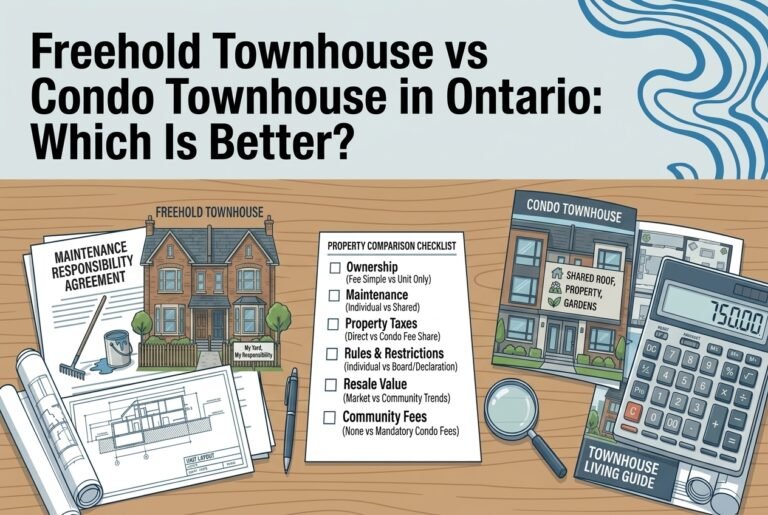
Freehold Townhouse vs Condo Townhouse in Ontario: Which Is Better? Updated November 30, 2026 Townhouses have become one of the...
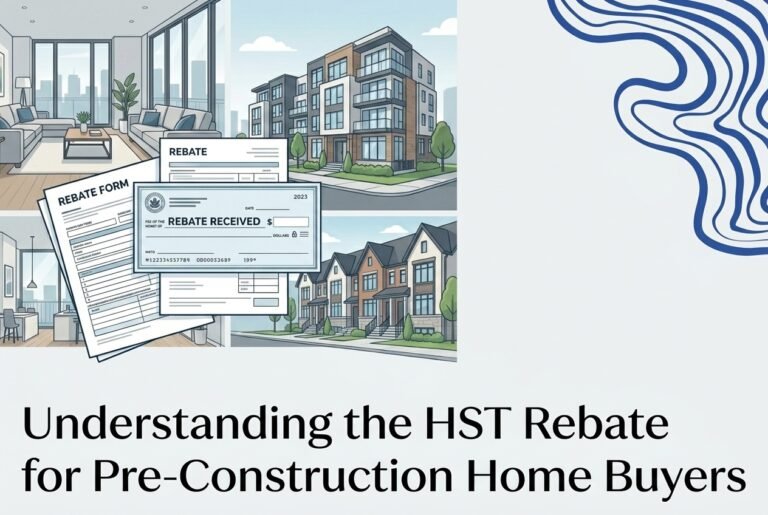
Understanding the HST Rebate for Pre-Construction Home Buyers in Ontario: 2026 Guide Updated August 20, 2026 Buying a pre-construction home...
Building Wealth from the Ground Up: Pre-Construction Investment for Every Home Type Investing in pre-construction properties is becoming an increasingly...