
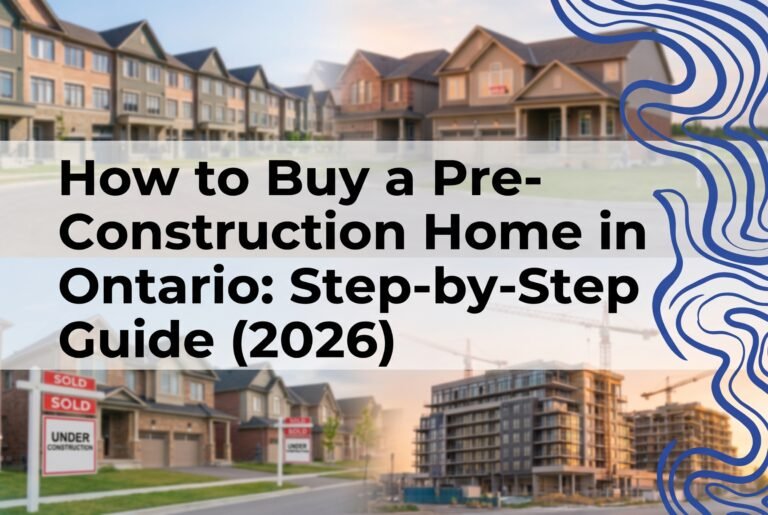
How to Buy a Pre-Construction Home in Ontario: Step-by-Step Guide (2026)
Updated September 18, 2026
Buying a pre-construction home in Ontario is very different from buying a resale property.
You are often purchasing from floor plans, paying deposits over time, signing a detailed builder Agreement of Purchase and Sale, waiting months or years for construction, and then navigating occupancy, financing, HST rebates and final closing.
That process can seem complicated—especially for first-time buyers.
The good news is that once you understand the sequence, buying pre-construction becomes much easier to evaluate.
This 2026 guide walks you through the process from your first project search to receiving your keys.
Step 1: Decide What You Actually Want to Buy
Before looking at projects, define your priorities.
Start with:
Preferred location
Maximum comfortable budget
Home type
Number of bedrooms
Parking requirements
Lot size
Closing timeline
School or transit needs
Whether the property will be your principal residence or an investment
How much cash you can comfortably commit to deposits
In Ontario, pre-construction options may include:
Condominiums
Stacked townhomes
Condo townhouses
Freehold townhomes
Semi-detached homes
Detached homes
Inventory or quick-closing homes
A buyer looking for a $700,000 freehold townhouse with a backyard has a very different search profile from someone looking for a downtown Toronto condominium.
The more clearly you define your requirements, the easier it becomes to compare projects intelligently.
Step 2: Establish Your Budget Before Shopping
Do not start with:
“How much will the builder let me deposit?”
Start with:
“How much home can I comfortably afford?”
Your financial plan should consider:
Builder deposits
Mortgage qualification
Additional down payment required at closing
Land transfer tax
Legal fees
Builder adjustments
HST treatment
Moving costs
Emergency savings
A pre-construction closing may be years away, but you still need to understand whether the purchase is financially realistic today.
Qualifying buyers purchasing a newly built home may have access to insured mortgages with amortization periods of up to 30 years, provided the applicable mortgage-insurance requirements are met. CMHC’s Home Start program currently permits 30-year insured amortizations for qualifying new-build buyers and first-time purchasers, with maximum lending value below $1.5 million.
Step 3: Get an Early Mortgage Assessment
A mortgage pre-approval is particularly useful before entering into a pre-construction agreement.
A mortgage professional can review:
Income
Employment
Credit
Existing debts
Available down payment
Mortgage stress-test qualification
Estimated monthly payments
But remember:
A mortgage pre-approval today does not guarantee financing several years from now.
At final closing, your lender will reassess your financial position and may also require an appraisal of the completed property.
That is why pre-construction buyers should avoid stretching their budget to the absolute maximum.
Leave room for changes in rates, income, lending requirements and property values.
Step 4: Research the Builder
In today’s market, builder due diligence is essential.
Before buying, research:
How long the builder has operated
Previous completed communities
Construction quality
Warranty history
Customer-service reputation
Project delays
Whether the builder is properly licensed
Ontario buyers can use the Home Construction Regulatory Authority’s Ontario Builder Directory to review builder licensing and regulatory information. The directory includes licensing status and warranty-related information for builders operating in Ontario.
Do not rely solely on social media, renderings or promotional material.
The builder matters just as much as the floor plan.
Step 5: Compare the Project Against Resale and Other New Homes
One of the biggest mistakes buyers make is evaluating a project only against other builder projects.
In 2026, you should also compare it against resale inventory.
Look at:
Purchase price
Price per square foot where relevant
Lot size
Parking
Backyard
Builder incentives
Deposit structure
HST eligibility
Closing costs
Development-charge caps
Upgrade value
Closing timeline
Comparable resale homes nearby
A brand-new home may offer strong value.
But not every new home is automatically better than resale.
Today’s market gives buyers more opportunity to compare.
Use it.
Step 6: Review Builder Incentives Carefully
Builders may offer incentives such as:
Price reductions
Extended deposits
Décor credits
Appliance packages
Finished basements
Mortgage-rate incentives
Free assignments
Capped development charges
Closing-cost credits
Lot-premium discounts
Do not judge an incentive only by the advertised dollar value.
A “$75,000 incentive package” could include items you would never have purchased yourself.
The better question is:
“How much does this incentive reduce my real cost?”
Step 7: Register for the Project
For many new releases, buyers—or their Realtors—register before purchasing.
Registration can provide access to:
Floor plans
Price lists
Incentive packages
Deposit structures
Site plans
Availability
Launch information
Some builder launches give cooperating Realtors early or priority access.
This can be valuable for buyers looking for specific:
Lots
Corner properties
Ravine lots
Floor plans
Closing dates
Registration itself generally does not mean you’ve purchased anything.
It simply puts you in position to receive information and potentially request a unit or lot.
Step 8: Submit a Worksheet or Purchase Request
During high-demand releases, builders may use a worksheet or reservation process.
A worksheet may ask for:
Purchaser names
Contact information
Preferred model
Preferred lot or unit
Backup selections
Realtor information
Submitting a worksheet usually does not create a binding purchase agreement.
The builder may review requests and determine allocations.
If you’re allocated a lot or unit, the builder will normally invite you to proceed with an Agreement of Purchase and Sale.
Step 9: Review the Price Before Signing
Before signing, confirm exactly what is included.
Ask:
Is HST included in the advertised price?
Which rebate has been assumed?
Is there a lot premium?
Are upgrades included?
Is parking included?
Is a locker included?
Are development charges capped?
Are utility charges capped?
Is air conditioning included?
Are appliances included?
Are there assignment fees?
What are the deposit dates?
What is the tentative closing or occupancy date?
Do not rely only on a salesperson’s verbal explanation.
Important financial terms should appear in the purchase agreement, amendment or incentive schedule.
Step 10: Sign the Agreement of Purchase and Sale
The Agreement of Purchase and Sale, or APS, is the legally binding contract between you and the builder.
Builder agreements are usually much longer and more complex than ordinary resale agreements.
They can contain provisions covering:
Deposits
Closing dates
Construction delays
HST
Assignments
Builder adjustments
Development charges
Utility charges
Lot changes
Substitutions
Construction tolerances
Mortgage requirements
Default
Project cancellation conditions
Never treat the APS as routine paperwork.
Step 11: Understand the Cooling-Off Period
This is an area where buyers need to distinguish between condominiums and freehold homes.
Pre-Construction Condominiums
Ontario buyers purchasing a new or pre-construction condominium from a developer generally have a:
10-day cooling-off period
during which they can cancel the purchase for any reason. Ontario’s consumer guidance confirms this statutory 10-day cancellation right for new and pre-construction condo purchases.
This is one reason lawyer review immediately after signing is so important.
Freehold Homes
Do not assume every freehold purchase has the same automatic 10-day condo cooling-off period.
Freehold agreements operate under a different framework.
Tarion’s Addendum may provide specific review or termination rights where certain Early Termination Conditions or project-viability conditions appear in the agreement. Tarion states that some early termination conditions trigger a three-business-day review period, while project-viability conditions can provide a 10-day review period.
Your lawyer should tell you exactly what rights apply to your agreement.
Step 12: Have a Real-Estate Lawyer Review the APS Immediately
This is one of the most important steps.
Have an Ontario real-estate lawyer experienced with builder transactions review the agreement as soon as possible.
Ask the lawyer to specifically identify:
Uncapped development charges
Municipal levies
Utility charges
HST provisions
Assignment restrictions
Closing adjustments
Construction-delay clauses
Early termination conditions
Occupancy terms
Unusual builder rights
Potential closing-cost exposure
Do not simply ask:
“Is the agreement okay?”
Ask:
“What financial and legal risks should I know about before I become fully committed?”
Step 13: Pay Your Builder Deposits
Once you proceed with the transaction, you’ll need to follow the deposit schedule in your APS.
A builder may require:
$5,000 or $10,000 on signing
Balance to a percentage within 30 days
Additional instalments at 60, 90, 120 or 180 days
Further deposits over 12–24 months
Current projects may offer total deposit structures of:
5%
8%
10%
15%
20%
There is no universal Ontario builder deposit requirement.
For more detail, see our How Much Deposit Do You Need for a Pre-Construction Home in Ontario? guide.
Step 14: Register Your New Freehold Purchase With Tarion
This is an important 2026 change.
Starting April 1, 2026, purchasers of new freehold homes are required to notify Tarion of the purchase by registering within:
45 days of signing the APS
Tarion says the registration is free and allows it to verify that the builder is properly licensed and provide the purchaser with warranty information.
Tarion also states that the new registration rules are tied to maximum deposit-protection eligibility, although it has implemented a transition period before the related deposit-coverage consequences fully take effect on January 1, 2027.
This should now be part of every freehold pre-construction buyer’s checklist.
Step 15: Understand Deposit Protection
Ontario’s new-home warranty framework provides certain protections for deposits.
For freehold homes, Tarion currently provides protection of:
Up to $60,000 where the sale price is $600,000 or less
10% of the purchase price up to $100,000 where the sale price exceeds $600,000
subject to applicable requirements.
Condominium deposits are generally protected primarily through statutory trust requirements, with additional Tarion protections in specified circumstances.
Buyers should understand:
Who holds their deposits
What protection applies
What happens if the project is terminated
before committing substantial funds.
Step 16: Monitor Construction and Closing Dates
After purchasing, construction begins—or continues.
This stage can last months or years.
Your Tarion Addendum contains critical dates and rules concerning closing or occupancy.
For freehold homes, builders can use firm or tentative closing dates.
Tarion explains that tentative closing structures can permit up to two extensions of as much as 120 days each before delayed-closing compensation becomes applicable, subject to the Addendum rules.
The Addendum also includes an Outside Closing Date, beyond which buyers may gain termination rights if the home is not completed according to the applicable rules.
Do not make irreversible plans based solely on the first tentative date.
Step 17: Watch for Builder Notices
Builders will communicate during construction about issues such as:
Closing-date changes
Construction milestones
Décor appointments
Structural selections
Utility arrangements
Lawyer information
Mortgage information
Pre-delivery inspections
Read every notice carefully.
Some notices have deadlines.
Missing one can create unnecessary problems.
Step 18: Choose Structural Upgrades Early
Depending on the project, builders may give you opportunities to select:
Floor-plan modifications
Main-floor bedrooms
Additional bathrooms
Finished basements
Separate entrances
Larger windows
Fireplace options
Kitchen layouts
Electrical upgrades
Structural changes often need to be selected much earlier than cosmetic finishes.
Once construction reaches certain stages, the builder may no longer permit changes.
Step 19: Attend the Décor or Design Appointment
Later, you may select finishes such as:
Flooring
Cabinets
Countertops
Tiles
Hardware
Plumbing fixtures
Paint selections
Interior doors
Before upgrading everything, consider:
Builder upgrade cost vs doing the improvement after closing.
Some upgrades are easier to complete during construction.
Others may be significantly cheaper afterward.
Focus builder spending on items that are difficult or disruptive to change later.
Step 20: Keep Your Finances Stable During Construction
This is critical.
Do not assume that because you qualified when you signed the APS, you can freely change your finances before closing.
During the construction period, avoid unnecessary:
Large new car loans
Credit-card debt
Co-signing loans
Personal loans
Employment instability
Your lender will assess your financial situation again when the home closes.
A major increase in debt could reduce your mortgage qualification.
Step 21: Revisit Your Mortgage Well Before Closing
As closing approaches, speak with your lender or mortgage professional again.
Review:
Updated income
Updated credit
Interest rates
Required down payment
Appraisal
Mortgage insurance
Closing costs
Funds required
Do not wait until the final week.
For qualifying insured new-build purchases, CMHC currently permits up to 95% loan-to-value on eligible one- and two-unit owner-occupied properties, using the current minimum equity formula of 5% on the first $500,000 and 10% on the remainder, with a maximum lending value below $1.5 million.
Step 22: Prepare for the Appraisal
Your lender may require the completed home to be appraised.
This matters because mortgage financing can depend on the property’s appraised value.
Suppose you purchased at:
$1,000,000
but the lender appraises the completed property at:
$900,000
The lender may base financing on the lower value.
You could need additional cash to close.
This is known as appraisal risk.
It is one reason buyers should maintain a financial cushion throughout the construction period.
Step 23: Understand Your HST Rebate Before Closing
This has become especially important in 2026.
Ontario’s temporary Enhanced New Housing Rebate now provides qualifying buyers with significant relief from the provincial portion of HST.
The federal First-Time Home Buyers’ GST/HST Rebate is also now law and open for applications.
The federal first-time-buyer program provides eligible purchasers with up to 100% of the federal GST portion on qualifying new homes valued up to $1 million, with the rebate gradually reduced between $1 million and $1.5 million.
Ontario also provides enhanced provincial relief under its current programs.
The existing CRA new-housing framework generally requires the property to be intended as the purchaser’s or qualifying relation’s primary residence for the owner-occupied rebate.
Your lawyer should confirm:
Which rebate applies
Whether the builder is crediting it
Whether you need to apply afterward
What happens if you do not qualify
Do not assume every advertised rebate applies automatically.
For a full explanation, see our Understanding the HST Rebate for Pre-Construction Home Buyers in Ontario: 2026 Guide.
Step 24: Budget for Closing Costs
Your purchase price is not your total cost.
Potential closing expenses include:
Ontario Land Transfer Tax
Toronto Municipal Land Transfer Tax where applicable
Legal fees
Title insurance
Builder adjustments
Development charges
Utility charges
Property-tax adjustments
Mortgage costs
Occupancy expenses for some condos
HST-related amounts
Your lawyer should review your Statement of Adjustments before final closing.
For a detailed breakdown, see our Pre-Construction Closing Costs in Ontario: Complete 2026 Guide.
Step 25: Attend the Pre-Delivery Inspection
Before taking possession, buyers typically attend a Pre-Delivery Inspection, commonly called the PDI.
This is your opportunity to inspect the home with the builder’s representative.
Look carefully at:
Flooring
Walls and ceilings
Doors and windows
Cabinets
Countertops
Plumbing
Electrical outlets
Appliances where included
Exterior items where accessible
Missing or damaged finishes
Document issues carefully.
Photographs and written notes can be useful.
The PDI does not replace later warranty rights, but it creates an important record of the home’s condition before possession.
Step 26: Understand Interim Occupancy if You’re Buying a Condo
Condominium buyers may have an additional stage called:
Interim occupancy
This occurs when your unit is ready but the condominium corporation has not yet been registered.
You may move into the unit, but:
You don’t legally own it yet.
During interim occupancy:
Title has not transferred
Your traditional mortgage generally has not yet funded
You may pay the builder an occupancy fee
Occupancy fees can generally include amounts relating to:
Interest on the unpaid purchase balance
Estimated property taxes
Common expenses
Final closing occurs later when the condominium is registered and title can transfer.
Freehold buyers usually do not have this same two-stage closing structure.
Step 27: Arrange Home Insurance
Before final closing, your lender and lawyer will generally require appropriate home insurance.
Contact an insurance provider in advance and make sure coverage begins when you assume ownership.
Condo buyers should also understand the difference between:
The condominium corporation’s insurance
Their own unit-owner insurance
Step 28: Complete Final Closing
At final closing:
Your mortgage funds
Remaining down-payment money is delivered
Closing costs are paid
The lawyer completes land registration
Ownership transfers to you
You receive your keys according to the closing arrangements
Your lawyer will provide a final accounting showing:
Purchase price
Deposits already paid
Mortgage proceeds
Adjustments
Taxes
Legal expenses
Balance required
This is the point where you legally become the owner.
Step 29: Understand Your Tarion Warranty
The process does not end when you get the keys.
New Ontario homes come with statutory warranty protection.
Tarion’s warranty framework addresses specified issues over different warranty periods and includes protections relating to construction defects and major structural matters.
Keep:
Your APS
Tarion documentation
PDI records
Photos
Builder correspondence
Receipts
in one organized file.
Warranty deadlines matter.
Step 30: Submit Warranty Forms on Time
After possession, inspect the property carefully.
If you discover defects or incomplete work, report eligible items through the applicable Tarion warranty process.
Do not assume that mentioning something verbally to the site superintendent preserves every warranty right.
Use the proper written warranty process and meet applicable deadlines.
The Complete Pre-Construction Buying Process at a Glance
The typical Ontario process looks like this:
1. Establish your budget
↓
2. Get mortgage guidance
↓
3. Research builders and communities
↓
4. Compare new construction with resale
↓
5. Register for projects
↓
6. Review pricing and incentives
↓
7. Submit worksheet/request
↓
8. Receive allocation
↓
9. Sign APS
↓
10. Lawyer review / applicable cooling-off period
↓
11. Pay builder deposits
↓
12. Register qualifying freehold purchase with Tarion
↓
13. Construction period
↓
14. Structural and décor selections
↓
15. Monitor financing
↓
16. Confirm HST rebate treatment
↓
17. Prepare closing funds
↓
18. PDI
↓
19. Interim occupancy if applicable
↓
20. Final closing
↓
21. Tarion warranty period
10 Mistakes to Avoid When Buying Pre-Construction
1. Buying based only on the starting price
The advertised price may not include the lot, model or upgrades you actually want.
2. Skipping lawyer review
Builder agreements can contain significant financial obligations.
3. Assuming every HST rebate applies
Eligibility depends on your circumstances and transaction.
4. Confusing builder deposits with mortgage down payments
They are related but not identical.
5. Spending all your savings on deposits
You still need closing costs and emergency reserves.
6. Ignoring resale competition
Always compare the new home with what the same budget buys today.
7. Assuming the first closing date is guaranteed
Many new-home dates are tentative.
8. Taking on excessive new debt before closing
Your mortgage qualification can change.
9. Ignoring assignment restrictions
Never assume you can sell the contract before completion.
10. Buying only because of incentives
A strong incentive cannot fix a poor project, weak location or overpriced home.
Frequently Asked Questions
How long does it take to buy a pre-construction home in Ontario?
Signing the purchase agreement can happen quickly, but construction and final closing may take months or several years depending on the project.
Do pre-construction condos have a cooling-off period?
Yes. Ontario purchasers of new or pre-construction condominiums generally have a 10-day statutory cooling-off period in which they may cancel the agreement.
Do freehold pre-construction homes have the same 10-day cooling-off period?
Not automatically. Different rules apply to freehold homes. Certain Tarion Addendum provisions and early termination conditions can provide specific review or termination rights. Buyers should have their lawyer confirm the applicable rights in their contract.
How much deposit do you need?
It depends on the builder. Current projects can require 5%, 8%, 10%, 15% or 20%, usually paid in instalments.
Do I need a mortgage before buying?
You generally don’t receive the final mortgage until closing, but obtaining financing advice or a pre-approval before signing is strongly recommended.
Can a builder delay my closing?
Yes, within the applicable rules. Tarion’s Addendum establishes the permitted framework for tentative and firm closing dates, notice requirements and delayed-closing protection.
Can I cancel if construction is delayed?
Under certain circumstances, yes. Tarion’s Addendum includes Outside Closing or Occupancy Dates and termination rights where applicable. The exact rights depend on the contract and circumstances.
Can I sell my pre-construction contract before closing?
Only if assignment is permitted under the APS and the builder’s requirements are satisfied. Builder consent and assignment fees may apply.
Can I get an HST rebate?
Potentially. Current federal and Ontario programs can provide substantial relief for eligible new-home buyers. Eligibility depends on purchase dates, home value, occupancy and other conditions.
Do I need a Realtor to buy from a builder?
A buyer can approach a builder directly, but an experienced Realtor can help compare projects, pricing, incentives, deposit structures and alternatives. Representation terms and builder cooperation should be established before registration or first contact because builder policies vary.
The Bottom Line
Buying pre-construction should not be treated as:
Choose a floor plan → Pay a deposit → Wait for the keys.
The real process is:
Research
Financial planning
Builder due diligence
Contract review
Deposit management
Mortgage preparation
Closing-cost planning
Warranty protection
The buyers who are best prepared are usually the ones who understand the entire transaction before signing—not after.
In today’s Ontario market, buyers have more choice across many projects, and current builder incentives and government programs can create meaningful opportunities.
But that makes comparison even more important.
The goal isn’t simply to buy a pre-construction home.
The goal is to buy the right home, from the right builder, at the right price and on terms that make financial sense for you.
Ready to Explore New Homes in Ontario?
At New Home Source, we help buyers navigate the pre-construction process from the initial project search through builder pricing, deposits, incentives, available lots and closing timelines.
We can help you compare:
Pre-construction communities
Inventory and quick-closing homes
Current builder incentives
Deposit programs
Townhomes
Semi-detached homes
Detached homes
New-home opportunities across Ontario
Thinking about buying a new home? Contact New Home Source to explore current projects and find opportunities that fit your budget, timeline and home-buying goals.
Disclaimer: This article is provided for general informational and real-estate marketing purposes only and does not constitute legal, tax, mortgage, investment or financial advice. Builder agreements, incentives, financing requirements, government programs and warranty rules vary and may change. Buyers should obtain independent legal advice and appropriate mortgage and tax advice before entering into an Agreement of Purchase and Sale.
You Might Also Like
How to Buy a Pre-Construction Home in Ontario: Step-by-Step Guide (2026) Updated September 18, 2026 Buying a pre-construction home in...
Investing in pre-construction condos in the Greater Toronto Area (GTA) can be a fantastic opportunity for both first-time buyers and...
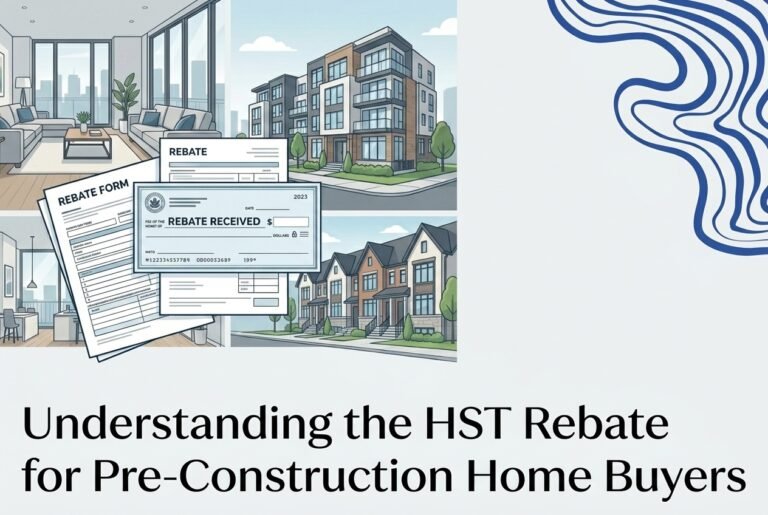
Understanding the HST Rebate for Pre-Construction Home Buyers in Ontario: 2026 Guide Updated August 20, 2026 Buying a pre-construction home...