
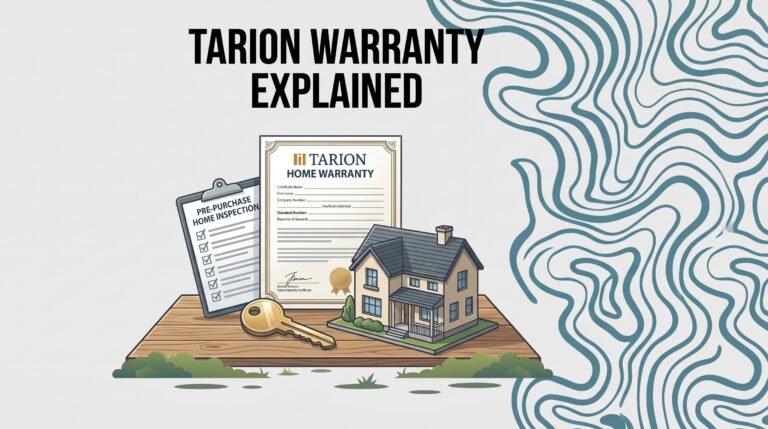
Tarion Warranty Explained: What Ontario New Home Buyers Are Actually Protected Against
Updated November 3, 2026
Buying a brand-new home in Ontario comes with something most ordinary resale homes don’t have:
Statutory new-home warranty protection.
You may hear builders and Realtors simply say:
“The home comes with Tarion warranty.”
But what does that actually mean?
Does Tarion fix everything that goes wrong with a new home?
Does it cover cosmetic defects?
What happens if your closing is delayed?
What happens to your deposit if the builder cannot complete the home?
And how long does the warranty actually last?
Ontario’s new-home warranty system provides important protections both before and after you receive your home, but buyers need to understand what is covered, what isn’t, and what they need to do to preserve their rights.
Here’s a practical guide for Ontario new-home buyers in 2026.
What Is Tarion?
Tarion administers Ontario’s statutory new-home warranty and protection program.
However, there’s an important distinction:
Your builder provides the warranty.
Tarion:
Backstops and administers the warranty system.
In most situations, if you discover a warranty issue, the builder gets the first opportunity to investigate and correct it.
If the builder doesn’t resolve an eligible warranty issue, the homeowner may then seek assistance through Tarion.
This distinction is important because Tarion isn’t simply an insurance company that automatically sends someone to repair every problem.
Tarion vs HCRA: What’s the Difference?
Buyers sometimes confuse Tarion with the Home Construction Regulatory Authority, or HCRA.
They perform different roles.
HCRA
The HCRA licenses and regulates Ontario’s new-home builders and vendors.
Tarion
Tarion administers the new-home warranty and protection program.
An easy way to remember it is:
HCRA regulates the builder.
Tarion administers the warranty.
Before purchasing a new home, buyers should therefore consider both:
Is the builder properly licensed?
and
What warranty protection applies to my home?
When Does Tarion Protection Begin?
Many buyers assume the warranty starts when they receive the keys.
That’s only part of the story.
Certain protections begin much earlier.
Ontario’s new-home warranty framework can provide protection:
Before possession
and
After possession.
Before possession, protection can include areas such as:
Deposits
Delayed closing or occupancy
Certain financial losses
Condominium project cancellation circumstances
After possession, construction warranty coverage generally falls into:
1-year
2-year
and
7-year
coverage periods.
Let’s break them down.
Before You Move In: Deposit Protection
You may pay tens of thousands of dollars in deposits before your home is built.
So what happens if the sale cannot be completed in certain qualifying circumstances?
Tarion provides deposit protection subject to applicable rules and limits.
For example, protection may become relevant where the builder:
Becomes bankrupt
Fundamentally breaches the purchase agreement
Fails to return a deposit when the purchaser has a statutory right to terminate
The exact protection depends partly on the type of home.
How Much Freehold Deposit Protection Is Available?
For qualifying freehold purchases under the current framework:
Purchase price of $600,000 or less
Deposit protection can be up to:
$60,000
Purchase price over $600,000
Protection can generally equal:
10% of the purchase price
up to a maximum of:
$100,000.
This is particularly important in today’s market because builder deposits can be substantial.
Important New 2026 Rule: Register Your Freehold Purchase
This is one of the biggest Tarion changes Ontario pre-construction buyers need to know about.
Effective:
April 1, 2026
purchasers of new freehold homes are required to register their purchase with Tarion within:
45 days of signing the Agreement of Purchase and Sale.
Registration creates a record of your purchase and allows Tarion to provide important warranty information and help identify illegal building or selling activity.
There is currently a transition period relating to the deposit-coverage consequences of late registration, with those consequences deferred until January 1, 2027.
But the registration requirement itself began April 1, 2026.
Practical takeaway:
If you purchase a new freehold home:
Register it promptly.
Don’t wait until closing.
Where Do You Find the Information to Register?
New-home purchase agreements include a Warranty Information Sheet.
For agreements signed under the newer system, this includes information such as:
Home ID
Registration code
Warranty information
Deposit-protection information
PDI information
Keep this document with your APS.
It’s not just another builder attachment.
What About Condominium Deposits?
Condominium deposits are handled differently.
New condominium deposits are generally subject to statutory trust protections under Ontario condominium legislation.
The new 45-day Tarion freehold registration requirement therefore doesn’t apply to condominium purchasers in the same manner.
This is one example of why buyers shouldn’t assume the rules for:
Freehold pre-construction
and
Pre-construction condominiums
are identical.
Protection Against Delayed Closing
Another important Tarion protection begins before possession.
Imagine your builder originally expects your home to close in:
June 2028.
You plan your move.
You sell your existing home.
You arrange financing.
Then the builder changes the closing date.
Ontario’s new-home warranty framework establishes rules around:
Tentative closing dates
Firm closing dates
Outside closing dates
Required notices
Permitted extensions
Delayed-closing compensation
The builder cannot simply treat every closing date as meaningless.
Tentative vs Firm Closing Dates
This distinction is extremely important.
Tentative Closing Date
A tentative date gives the builder permitted flexibility under the Tarion framework.
For example, when construction is still at an early stage, the builder may not know exactly when the home will be completed.
Certain extensions may therefore be permitted without triggering compensation.
Firm Closing Date
A firm closing date provides greater certainty.
If the builder fails to meet the Firm Closing Date outside permitted exceptions, delayed-closing rights may arise.
Your APS should include a Tarion Addendum containing a:
Statement of Critical Dates.
Read it.
Don’t only look at the date shown on the builder’s marketing material.
How Much Delayed-Closing Compensation Is Available?
For qualifying delayed closings, compensation can be available up to:
$7,500.
The applicable rules determine when compensation becomes payable.
Depending on the claim, compensable expenses can potentially involve direct costs arising from the delay.
Buyers should preserve:
Receipts
Correspondence
Builder notices
Moving-related documentation
if a significant delay occurs.
Does Tarion Guarantee Your Original Closing Date?
No.
This is a common misunderstanding.
Tarion provides a framework governing closing dates, extensions, notices and compensation.
It doesn’t mean:
“The builder can never delay my home.”
Construction can be affected by legitimate factors.
The important protection is that builders must operate within the applicable contractual and statutory framework.
What Happens After You Receive the Home?
Once possession or occupancy begins, the construction warranty becomes especially important.
Ontario’s statutory new-home warranty generally contains three major coverage periods:
Year 1
Year 2
Year 7
Each covers different categories of defects.
The 1-Year Warranty
The first-year warranty is the broadest everyday workmanship and habitability protection.
It generally protects against defects involving matters such as:
Workmanship
Materials
Ontario Building Code violations
Unauthorized substitutions
Fitness for habitation
Your new home should be constructed in a workmanlike manner using suitable materials.
This doesn’t mean every minor imperfection automatically constitutes a warrantable defect.
But the builder is required to meet applicable standards.
Examples of Potential First-Year Issues
Depending on the circumstances and warranty standards, examples might include:
Improperly installed flooring
Defective doors
Cabinet deficiencies
Plumbing defects
Electrical problems
Incomplete work
Certain drywall issues
Construction deficiencies
Improper installation of components
Whether a particular item is covered depends on the applicable warranty standard and facts.
That’s why documenting issues properly is important.
The 2-Year Warranty
The second-year warranty becomes more focused.
Coverage generally includes certain issues involving:
Water penetration
Plumbing
Electrical systems
Heating systems
Exterior cladding
Building-envelope defects
Ontario Building Code health and safety violations
Water-related problems are particularly important.
For example, qualifying defects involving water penetration through:
Basement
Foundation
Windows
Roof
Exterior building envelope
may potentially fall within the applicable two-year protection.
The 7-Year Warranty
The longest statutory coverage period concerns:
Major Structural Defects.
This is not a seven-year bumper-to-bumper warranty.
The seven-year protection focuses on serious structural problems that meet the applicable definition.
Examples can involve major defects affecting structural load-bearing components or defects serious enough to materially affect the home’s use.
Think:
Structural integrity.
Not:
Paint touch-ups six years after closing.
Does Tarion Cover Every Crack?
No.
New homes naturally experience some movement and settlement.
Materials:
Expand
Contract
Dry
Settle
A small drywall crack is not the same thing as a major structural defect.
Similarly:
Cosmetic issue
and
Structural failure
are not interchangeable.
The warranty standards help determine whether an observed condition constitutes a warrantable defect.
What Is a Pre-Delivery Inspection?
Before taking possession, you’ll typically participate in a:
Pre-Delivery Inspection—or PDI.
This is your opportunity to inspect the home with the builder or builder representative before possession.
During the PDI, examine areas such as:
Floors
Walls
Ceilings
Doors
Windows
Cabinets
Countertops
Plumbing fixtures
Electrical fixtures
Appliances where included
Stairs
Bathrooms
Exterior items where accessible
The PDI is extremely important.
The PDI Is Not Your Only Warranty Claim Opportunity
Another common misconception is:
“If I miss something during the PDI, I lose the warranty.”
Not necessarily.
The PDI documents the condition of the home before possession and is particularly useful for identifying:
Damage
Missing items
Incomplete work
Visible defects
But certain warranty issues may become apparent only after you move in.
For example:
You probably won’t know during a short PDI whether:
A window leaks during heavy rain
Heating performs properly during winter
A plumbing problem develops
A hidden defect becomes visible
Ontario’s warranty process provides post-possession claim opportunities as well.
Take Your PDI Seriously
Don’t treat the PDI like a ceremonial key handover.
Take your time.
Look carefully.
Document issues.
If permitted, take:
Photos
Videos
Notes
Make sure visible damage or incomplete work is recorded.
The goal isn’t to find something wrong.
The goal is to create an accurate record of the home’s condition.
What Is Tarion MyHome?
After your warranty start date, homeowners can use Tarion’s online:
MyHome portal
to manage warranty-related matters.
The portal can be used to:
Submit warranty forms
Track claims
Receive notifications
Communicate regarding warranty matters
Request Tarion assistance where applicable
This is one reason buyers should make sure their information is properly registered and current.
Warranty Deadlines Matter
This is one of the most important things homeowners need to understand.
A valid construction problem doesn’t mean you should ignore filing deadlines.
Tarion’s process uses specific forms and timelines.
For homes under the current claims framework, homeowners can begin adding first-year items after possession, with the applicable initial submission process occurring during the early warranty period.
Additional warranty forms and timelines apply afterward.
Don’t rely on memory.
Use MyHome and monitor your deadlines.
Always Notify the Builder
The builder generally has the first responsibility to address warranty problems.
If you discover an issue:
Document it.
Notify the builder.
Submit it through the appropriate warranty process.
Keep records.
Don’t rely only on:
“I told the site supervisor six months ago.”
Keep written documentation.
What If the Builder Doesn’t Fix the Problem?
If the builder doesn’t resolve an eligible warranty issue within the applicable process, the homeowner can seek Tarion’s assistance.
Tarion may:
Review the claim
Assess whether the issue is warranted
Facilitate or require resolution under the warranty framework
This is the “backstop” function.
The builder remains the primary warranty provider.
Tarion provides the statutory mechanism when eligible problems aren’t properly resolved.
What Isn’t Normally Covered?
Tarion warranty isn’t designed to cover every problem that occurs in a home.
Examples of matters that may fall outside warranty protection can include:
Normal wear and tear
Damage caused by the homeowner
Improper homeowner maintenance
Alterations or renovations performed after possession
Certain normal shrinkage or settlement
Damage from unauthorized modifications
Issues outside applicable warranty standards
Secondary damage that could reasonably have been prevented after discovering a problem
Coverage depends on circumstances.
Homeowner Maintenance Still Matters
Buying a new home doesn’t eliminate homeowner responsibilities.
You may still need to:
Change furnace filters
Maintain humidity
Clean drainage systems
Maintain grading where appropriate
Remove snow
Maintain caulking
Monitor moisture
Operate mechanical systems correctly
Suppose you notice a small leak but ignore it for months.
If that causes extensive additional damage, the warranty analysis may become more complicated.
Report problems promptly.
Does Tarion Cover Appliances?
Don’t automatically assume your Tarion warranty covers every appliance supplied with the home.
Appliances may have:
Manufacturer warranties.
For example, your:
Refrigerator
Stove
Dishwasher
Washer
Dryer
may be covered under the manufacturer’s warranty rather than the statutory construction warranty for the appliance itself.
Keep all:
Manuals
Serial numbers
Warranty documents
Receipts
provided at possession.
Does Tarion Cover Builder Upgrades?
If an upgrade forms part of your builder agreement and is part of the home’s warranted construction, applicable warranty protections may apply depending on the issue.
This is another reason to keep:
Décor selections
Upgrade agreements
Change orders
Builder receipts
If you paid for something, keep proof of exactly what the builder agreed to provide.
What If You Sell the Home?
The statutory warranty is generally attached to:
The home.
Not simply the original purchaser.
If a qualifying home is sold before the applicable warranty period expires, the remaining warranty protection may continue for the subsequent owner.
This can also be a resale benefit.
A relatively new resale property may still have remaining statutory warranty protection.
Does Tarion Mean You Don’t Need a Home Inspection?
No.
Warranty protection and inspection serve different purposes.
Tarion gives you statutory rights if qualifying defects arise.
An inspection helps identify potential problems.
Some buyers choose to use qualified inspectors:
Before purchasing completed inventory where permitted
During the PDI process where permitted
After possession
Before certain warranty deadlines
Whether and when an inspection makes sense depends on the property and builder process.
Tarion Coverage vs Builder Customer Service
Another distinction buyers should understand:
A builder may voluntarily fix something even if it doesn’t technically meet the statutory warranty threshold.
That’s:
Customer service.
Tarion warranty protection is:
A legal/statutory framework.
Good builders may resolve minor issues without requiring homeowners to pursue a formal warranty claim.
But buyers should still understand their formal rights and deadlines.
How Much Overall Warranty Coverage Is Available?
Warranty coverage is subject to monetary limits based partly on when the first APS for the project was signed.
For newer projects, Tarion’s applicable statutory coverage limits can be substantial.
However, buyers should not interpret the maximum coverage amount as:
“Tarion will pay me this amount if something goes wrong.”
It is a maximum program coverage limit—not a guaranteed payout.
Your actual claim depends on the eligible defect or loss.
What About Condominium Common Elements?
Condominium ownership introduces another layer.
You own your individual unit, but the condominium corporation is responsible for common elements.
These might include:
Lobby
Hallways
Garage
Roof
Exterior
Amenities
Mechanical systems serving common areas
Tarion provides a separate warranty framework for condominium common elements.
Individual owners should therefore understand the distinction between:
Unit warranty issues
and
Common-element warranty issues.
What About Interim Occupancy?
Pre-construction condominium buyers may take occupancy before final closing.
During:
Interim Occupancy
you may live in the unit before receiving legal title.
Your warranty start date and claim process operate according to the applicable condominium warranty framework.
Don’t wait for final closing to start paying attention to deficiencies and warranty deadlines.
Tarion Doesn’t Replace Your Lawyer
This is another important point.
Tarion provides warranty protection.
It doesn’t replace independent legal advice regarding your APS.
Your lawyer should review matters such as:
Builder adjustments
Closing costs
HST
Development charges
Assignment rights
Termination provisions
Closing obligations
Tarion warranty and APS legal review solve different problems.
You need both protections working properly.
Tarion Doesn’t Guarantee the Builder Is “Good”
A licensed builder and an enrolled home receive important regulatory and warranty protections.
But that doesn’t mean every builder provides identical:
Construction quality
Customer service
Communication
Design
After-sales service
Before purchasing, research the builder through Ontario’s official Builder Directory and examine their history.
Warranty protection is important.
But ideally:
You want a well-built home—not simply a good warranty claim.
What Should Buyers Check Before Signing?
Before purchasing a new home, ask:
Is the builder licensed?
Is this home eligible for statutory warranty coverage?
Where is my Warranty Information Sheet?
What is my Home ID?
What deposit protection applies?
What are my critical closing dates?
What happens if closing is delayed?
When does my warranty start?
What are my claim deadlines?
Do I need to register this purchase with Tarion?
These are practical questions every new-home buyer should understand.
Your 2026 Tarion Checklist
When You Sign the APS
Keep:
APS
Tarion Addendum
Warranty Information Sheet
Deposit receipts
Upgrade agreements
For a new freehold purchase:
Register with Tarion within 45 days.
During Construction
Keep all builder communications involving:
Closing dates
Changes
Upgrades
Delays
Construction notices
Before Possession
Prepare for your:
PDI.
Create a checklist.
Take your time.
Document visible deficiencies.
After Possession
Register or access:
Tarion MyHome.
Track:
First-year deadlines
Second-year deadlines
Warranty correspondence
If You Discover a Problem
Document it.
Photograph it where useful.
Notify the builder.
Submit it within the applicable Tarion timeline.
Keep all correspondence.
Escalate through Tarion if appropriate.
Frequently Asked Questions
How long is Tarion warranty in Ontario?
Ontario’s statutory new-home warranty includes different protections lasting one year, two years and seven years, depending on the type of defect.
Is Tarion warranty automatically included with a new home?
Qualifying newly constructed homes sold by licensed Ontario builders are generally subject to the statutory new-home warranty framework. Buyers should verify the builder and home through the appropriate official resources.
Who actually provides the warranty—Tarion or the builder?
The builder provides the statutory warranty. Tarion administers and backstops the warranty program and can become involved when eligible issues aren’t properly resolved.
Does Tarion cover construction defects?
Yes, qualifying construction defects can be covered, but coverage depends on the type of defect, applicable warranty period and warranty standards.
Does Tarion cover closing delays?
Ontario’s new-home warranty framework includes delayed-closing and delayed-occupancy protection. Qualifying delayed-closing compensation can reach a maximum of $7,500.
Does Tarion protect my deposit?
Yes, qualifying deposits receive protection subject to applicable limits and rules. Freehold protection can currently reach as much as $100,000 depending on purchase price.
Do I have to register my new home with Tarion?
As of April 1, 2026, purchasers of new freehold homes are required to register their purchase with Tarion within 45 days of entering into the APS. A transition period currently applies to certain deposit-coverage consequences of late registration.
Does the warranty transfer if I sell my home?
Remaining statutory warranty protection generally follows the home, so a subsequent purchaser may benefit from coverage that has not yet expired.
Does Tarion cover cosmetic damage?
It depends on the condition, timing and applicable warranty standards. This is one reason visible damage should be carefully documented during the PDI.
Can I make a claim directly to Tarion without contacting my builder?
The builder generally receives the first opportunity to address warranty items. Homeowners should follow the applicable Tarion claim process and deadlines.
The Bottom Line
Tarion warranty is one of the genuine advantages of buying a brand-new Ontario home.
But don’t think of it as:
“Everything is covered for seven years.”
That’s inaccurate.
Think of the protection in layers.
Before possession:
Deposit protection + delayed-closing protection + other applicable financial protections
First year:
Broad workmanship, material, habitability and Building Code-related protection
Second year:
Important water, building-envelope, electrical, plumbing, heating and health-and-safety protection
Up to seven years:
Major structural defect protection
And throughout the process:
Deadlines matter.
The best approach isn’t simply knowing that your home “has Tarion.”
It’s understanding:
What is covered + When it’s covered + What you need to document + When you need to make a claim.
That knowledge can make your new-home warranty far more useful if something goes wrong.
Thinking About Buying a Brand-New Home in Ontario?
At New Home Source, we help buyers look beyond the floor plan and advertised price.
We can help you compare:
Pre-construction projects
Builder inventory homes
Quick-closing new homes
Builder incentives
Deposit structures
Closing timelines
HST rebate opportunities
Freehold townhomes
Semi-detached homes
Detached homes
Resale alternatives
Tell us your:
Budget + Preferred Location + Home Type + Closing Timeline
and we can help you identify new-home opportunities that fit your needs.
Contact New Home Source to explore current pre-construction and quick-closing new-home opportunities across Ontario.
Disclaimer: This article is for general informational and real-estate marketing purposes only. It is not legal advice and is not a substitute for Tarion’s official warranty rules, your Agreement of Purchase and Sale or advice from a qualified Ontario real-estate lawyer. Warranty eligibility, limits, standards, deadlines and procedures can change and may depend on the home and purchase date. Buyers and homeowners should confirm current requirements applicable to their property.
You Might Also Like

When it comes to selling your home, staging is more than just a superficial exercise—it’s a crucial part of the...

Smart Real Estate Investments: Choosing the Right Home Type for Maximum Returns Real estate investment offers an exciting opportunity to...
Purchasing a pre-construction home presents a unique set of opportunities and challenges, especially for first-time buyers and immigrants who might...